
Is Chasing Losses Ever Justified?


You lose a hand… then another… and suddenly your focus changes.
Not on playing well, but on getting your money back.
“Just one win and I’m even again.”
That thought is where most players go wrong.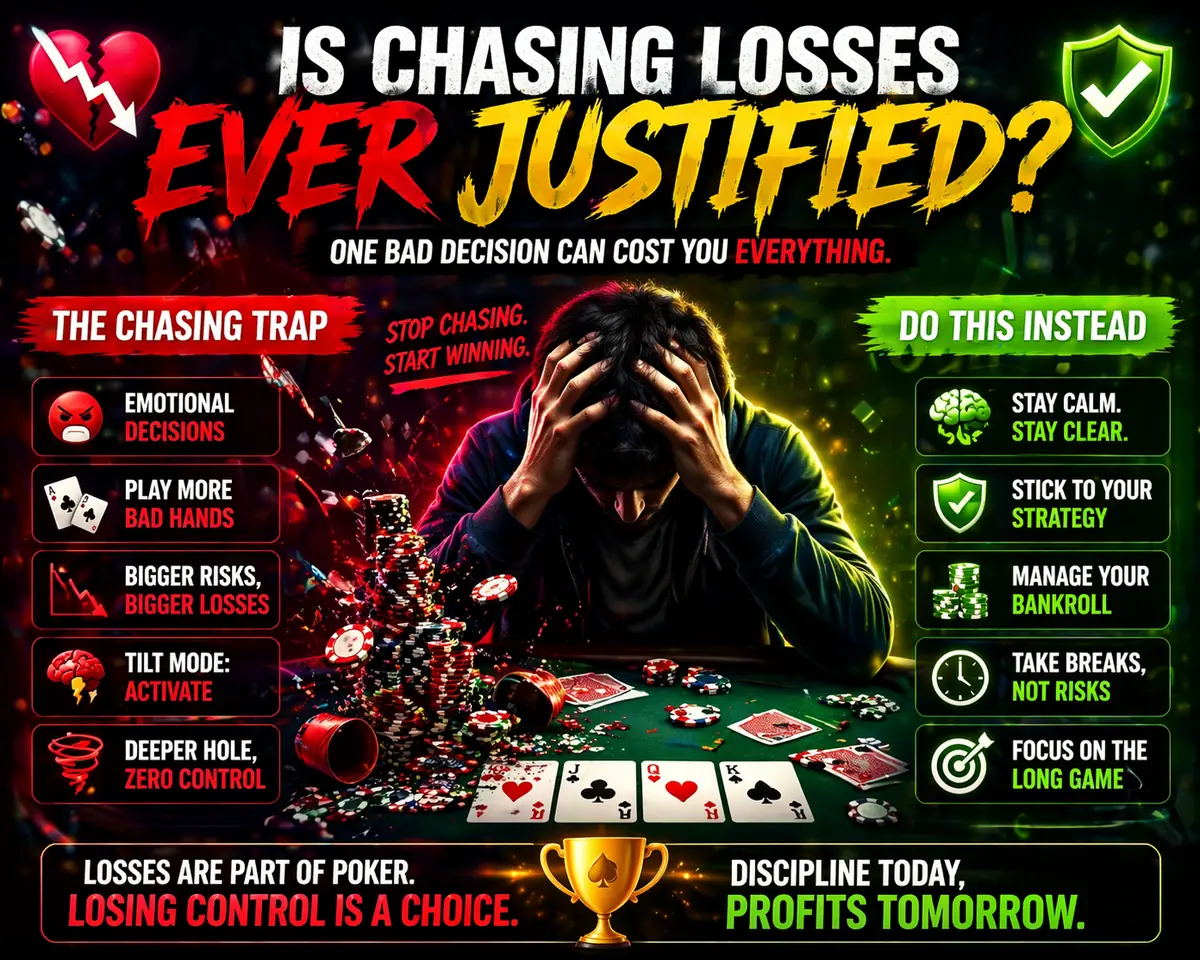
🎯 The Illusion of Control
Chasing losses feels logical in the moment.
You think:
• You’ve just been unlucky
• A win is “due”
• Stopping now means accepting defeat
But poker doesn’t work like that.
➙ The game doesn’t care what you lost.
Every hand is independent. There’s no “balance” waiting to correct itself.
💥 What Actually Happens
Instead of recovering, most players:
• Start playing hands they should fold
• Increase their bets without reason
• Make faster, emotional decisions
They stop playing strategy… and start playing frustration.
And that’s where losses multiply.
⚠️ The Dangerous Part
Here’s the trap:
Sometimes chasing losses works.
You hit a big hand, recover everything, maybe even profit.
But that’s exactly what makes it dangerous.
➙ It teaches your brain that chasing is okay.
Over time, that habit leads to bigger and more consistent losses.
🚀 What Winning Players Do Differently
Good players don’t chase.
They:
• Accept losses quickly
• Stick to their limits
• Walk away when emotions rise
They understand that poker is a long-term game, not a quick recovery mission.
🧠 Bottom Line
Chasing losses isn’t strategy, it’s emotion disguised as logic.
And in poker, emotional decisions are the most expensive ones you can make.
So next time you feel the urge to win it all back… ask yourself:
Are you playing smart or just trying to undo a mistake?


Please, login or register.