
Short Deck Poker Rules - How to Play 6+ Hold’em
Despite some criticism, Short Deck Poker (often dubbed 6 Plus Holdem) creates perfect conditions for a high-action experience. 36 units in the pack change gameplay and alternate the way the combinations rank. Read this guide to gain insight into the basic concepts, Short Deck hand rankings and how the math behind the flopping combinations changes. Strategy insights from experts are covered to help you deepen new knowledge.
What is Short Deck Poker?
It’s a fascinating poker game where the deck size isn’t casual but shortened. All values under 6 are discarded, and the pack thus includes 32 pieces, not 52. The removal affects Straights and Full Houses in that their positions in the ranking are lower. Why? Because they start appearing more frequently. This twist spices up things at the table.
Short Deck Poker got the nickname “Holdem 6+” because values from 2s to 5s are absent, and 6 is the bottom rank.
The table hosts from 2 to 10 players, but you’ll notice that these are normally 6-max matches. The Six Plus version occupies a separate niche among other variations due to the voiced deviations.
Many industry celebrities have a keen interest in the discussed format: Phil Ivey, Tom Dwan and a group of affluent Asian businessmen have become regular attendees at Triton, a prestigious high roller festival.
Basic Rules for Short Deck Poker
This discipline largely follows the rules of classic Texas Holdem, with minor deviations. Brush up on the main guidelines or learn them if you’re breaking new ground:
- Cards count. Six Plus requires a stripped-down pack ranging from six to Ace (36 pieces, not 52). Such alteration adds aggressiveness and dynamism to the process, as chances of completing monster hands go up.
- Hole & board cards. Everyone at the table gets the hole, and this term clarifies the 2 pocket cards that you start a gaming circle with. You must involve them in forming the lineup alongside 5 community cards on the board. The dealer always lays them face up so that their values are clearly visible.
- Betting rounds. There are four such phases (or “streets”), and this is the big point where Short Deck Hold’em rules match the traditional version. We refer to preflop, flop, turn and river. Each gives you the chance to place a bet, analyse the board and opponents, compare the new setup with your own strength and think about further moves: calling, raising, checking or folding.
- Combinations & rankings. 6+ sticks to the conventional ranking scheme. The combos match those used in full-set variants. However, flush sits higher than a boat (full house).
- Showdown. The punter who outranks all opposition in hand strength wins. When two combos are on the same strength level, the dealer divides the pot into equal chunks. On any street, it’s possible to avoid the exposure if you manage to convince rivals that you’re having the nuts and force them to end their participation.

In 6+ Hold'em format, each participant pays an ante, while the BTN seat posts the so-called "button blind," which is normally two to four times the ante size. Classic structure with the small and big blinds is employed occasionally, but such cases are extremely rare.
How to Play Short Deck Poker
The algorithm below describes each street in detail. After studying it, you’ll gain a deeper understanding of each 6+ stage.
Pre-flop
At the beginning, all table has to pay the ante (unless the blind structure is used). Suppose the ante size is £4. In this case, only the button contributes £8. All other players pay £4. Afterwards, everyone gets starters (pocket cards). These are 2 units dealt face down. Now, it's time to decide on a preflop move:
- check – pass the action to the next participant or follow the lead of others;
- raise – increase the stake;
- call – agree with the proposed bet;
- fold – muck the hand and give up.
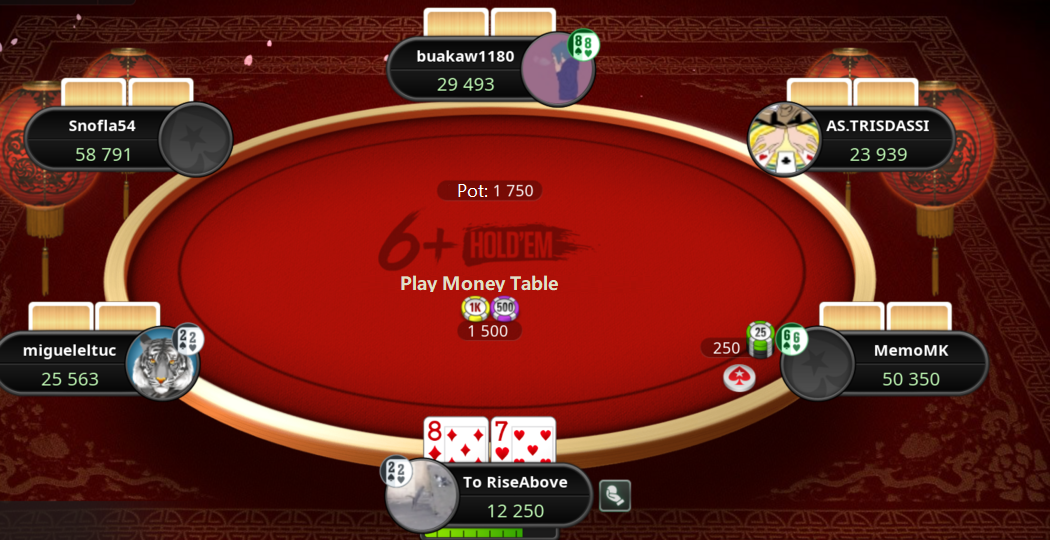
In Short Deck Poker, the participant left to the button initiates the action, and the further process continues clockwise.
Flop
After everyone makes their initial decision, the flop stage starts. The table sees the first 3 shared cards on the board. These are supposed to be used by everyone, so the dealer lays them face up.
Participants analyse the dealt items and try to combine them with pocket holdings. It is necessary to assess the probability of having a match. The next step is to increase the stakes, pass the decision, or give up. Short Deck Poker rules don’t alter the available moves at this point.
Turn
The fourth shared card appears. It is referred to as "turn" and means the 3rd betting phase starts. As a result of the previous two streets, the pot may grow substantially. Turn is also considered a defining spot of the game as it’s the time when participants get closer to completing draws.
Everyone now has to boost the stake, accept the previously proposed bet, or fold once again. Punters’ actions after dealing the fourth element give more insights into their hand strength.
River
Participants see the 5th face-up card on the Short Deck Hold’em table, which is the river. This is where everything takes shape. Everyone determines the final value of their own lineups on this street and has to make a wise decision. The possible actions with the river bet remain intact.
Players act based on the current hand value or bluff to scare the opposition away. If at least two punters continue, they’ll assess their combinations at the showdown.
Showdown: Who Wins the Pot?
Finally, the 5-card combinations are compared, and the strongest one wins. Suppose two punters end up with A-6-7-8-9 and 6-7-8-9-10, the latter combo is the winner (10 beats 9). When 2 players form identical hands in Short Deck Poker, they split the pot.
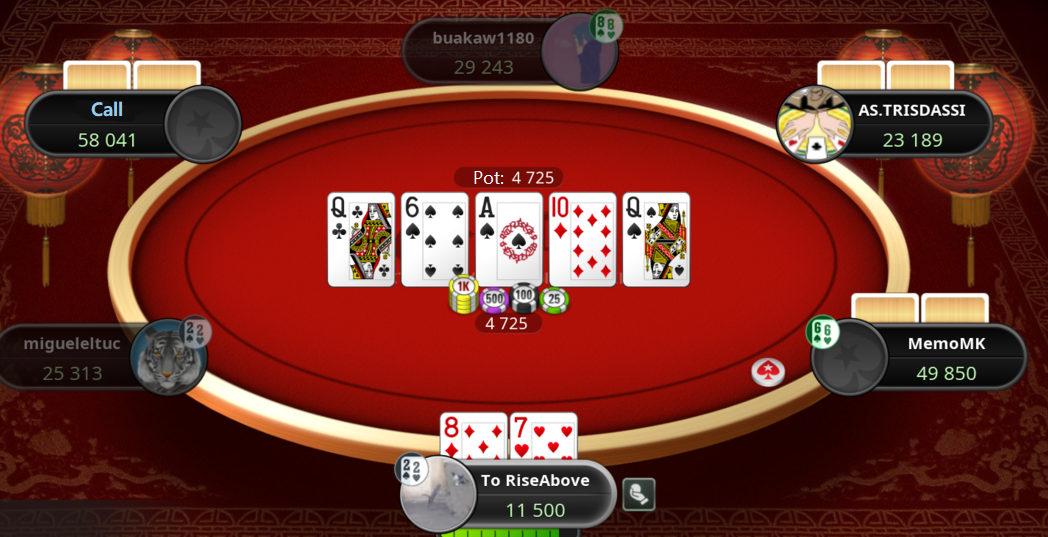
If we look at the screenshot above, a hero holds 8-7, meaning they only have a pair of Queens (it’s on the board). But we don’t know what the opponents have. Here are a few possible outcomes if anyone has:
- Ace, 10 or 6 – two pair;
- Queen – trips Qx-Qs-Qc
- King & Jack – Ace-high straight As-Kx-Qx-Jx-10d;
- Queen & Ace – full-house Qs-Qc-Qx-As-Ax.
- a pair of tens – full-house 10d-10x10x-Qs-Qc
In any case, 8-7 would likely be an underdog on this board. Even a 9 Kicker would beat it.
There are other variations with fewer than 52 pieces in the pack. A great example is 32 Draw poker, which consequently requires a 32-card deck. In this case, one table can accommodate a maximum of 5 people.
Hand Rankings in Short Deck Poker
The way the combinations form, as well as poker hand rankings in Six Plus, are very similar to those of the full-set version. For instance, Aces also perform two roles. These act as the highest element in straights like 10-J-Q-K-A. At the same time, an Ace carries the smallest possible rank.
The lowest straight in Short Deck Poker is A6789, where Ace performs as the low-rank card.
But there are certain aspects players should learn to master the Six+ specifics.
Exceptions to the Hand Hierarchy
- Three of a kind. It’s okay for some versions to put (set/trips) have a bigger value than straight. The cut deck changes the probability of hitting specific combos, and three of a kind occurs rarely.
- Flush vs The Boat. 6 Plus Holdem rules rank five items of the same suit above the Full House. This fact takes time to accept, especially for conventional gameplay enthusiasts. Paired combinations are common with the cut deck, so full house is rather frequent.
Short Deck Odds & Probabilities
To gain a better understanding of gameplay, take time and familiarise yourself with the probabilities of completing each combination. There are 1,326 starting combinations in the classic format, compared to 630 in the Six Plus variation.
Here are some more examples of odds disparities:
Scenario | Version | |
|---|---|---|
| Six Plus | Regular | |
| Chance of getting aces as hole cards | 0.95% | 0.45% |
| Probability of taking the pot with AA | 77% | 85% |
| Likelihood of being dealt any pair | 8.60% | 5.90% |
How Likely are Your Draws to Hit?
If you want to learn how to play 6+ Hold’em properly, it’s also crucial to understand the odds of transforming your current hand into a winning one on a specific street. If you have a flush draw on the 2nd street, there is a 16.5% chance to finish it by the river. There is only a 32.2% chance of finishing with a full house from a set, while a straight draw is completed in almost 26% of cases.
Compare the chances to strengthen on two streets – turn and river. Have a look at the table below to see these numbers.
Scenario | Version | |
|---|---|---|
| 6 Plus | Regular | |
| Finishing flush draw | 33% | 34.5% |
| Upgrading set to quads/full house | 54% | 33.1% |
| Improving 2 pair to a full house | 26% | 16.4% |
| Completing OESD (open-ended straight draw) | 51% | 31.3% |
| Hitting a gutshot | 26% | 16.4% |
Short Deck Poker Strategy Tips and Advice
The core concepts of Short Deck may look familiar if you already have a background in poker. But the winning strategies require you to shift your approach. Here are some fundamental tips to learn first:
- Open-limping is profitable. Beginners had better make their limp-reraise range wider by adding some strong combos like K-K and A-A to protect limping hands from opponents’ raises.
- Don’t give much credit to offsuit hands. In 6 plus, big pairs lose their strength as the power of flushes grows. Due to that fact, offsuit starters lose their value, and you should play them in a more cautious way. With suited cards and pocket pairs, you can apply a more aggressive approach.
- Be cautious with straight draws. Triton and some other variations state that sets have more power than straights. This is where you have no chance to win the pot holding a straight against any set (trips). Applying semi-bluffs may be a winning strategy for short deck games, as a straight can be nuts if you complete it, but you will draw dead in most rounds.
- Flushes are often nuts. That’s because they sit above full houses in the chart. So, you’ll hardly lose to someone with a better flush. This happens as the deck has fewer cards to complete the given combination; therefore, the odds that the rival hits a better flush are significantly lower.
- Semi-bluff low and medium pairs. Medium and low pairs are great for semi-bluffing, as you’ll improve to sets and four-of-a-kind more often. The value of trips is very high. In addition, the given pairs have a lot less showdown value than in regular Hold'em, so you probably will not take a check/call line with them.
3 and 6 Rule is Everything
If you want to know the exact odds of completing your hand, master the rule of 3 and 6. When the board lacks 2 elements, multiply your outs by six. Or, if there’s only one item that has to appear on the board, multiply the outs by 3.
Pros and Cons of the Game
- More intense action and a higher chance of finishing with strong combinations.
- Many weak players have knowledge gaps in 6+ holdem strategy.
- Antes make all punters contribute to the pot and get involved in the action.
- Bluffing becomes more effective due to the changed hand frequency.
- Weak and mediocre combos from a full pack hold more value in Six Plus.
- Higher variance, unlike the classic format.
- Experience is crucial to outplay the opposition.
- Altered values of combos take time to get used to.
Where to Practice Six Plus Format
Being introduced to the global scene in the mid-2010s, 6+ Hold’em is a widely played format in cash games and tournaments. British punters can find Six Plus tables in these licensed poker rooms:
PartyPoker
Currently, this poker room doesn’t host tournaments in the discussed format, only cash tables are available. The smallest buy-in is $2, an affordable amount for low-rollers. When playing, punters can request a partial withdrawal from the cash table. Conversely, you’ll play against the opponents that the system will seat you with – manual choice isn’t there.


#Ad 18+ Full T&C apply. GambleAware. New UK players only; min £10 deposit; 100% up to £1,000 deposit bonus paid in cash. £50 Free Play in P$, Partypoker Tour Path & SPINS Overdrive tickets released over 6 days. 14-day ticket expiry.
GGPoker
There’s enough 6 Plus Hold’em action to test your skills on GGPoker. In cash, stakes are more tailored to budget customers and those with medium-sized bankrolls: $0.02 up to $10. The respective buy-in range is from $0.80 up to $500. Only 6-max tables are featured in the lobby. A spicy add-on is daily leaderboards with $100 to $4,000 prize pools.
The “Tourney” tab looks far busier, with two to three Short Deck Poker events starting every hour. You’ll find both casual and bounty formats with regular, hyper and turbo speeds. Speaking of the entry fee, the price starts at $1 and rises to $215.


#Ad 18+ Full T&C apply. GambleAware. First time depositors only. Min deposit $10. Select 'Match Bonus' in cashier. Max bonus $600. Bonus released in $1 increment per $5 paid in net rake/tournament fees. 90 days after eligible first deposit to unlock full bonus. Withdrawal restrictions apply. Up to 50% Rakeback for new players until 30.04, as newcomers skip straight to Octopus status in Ocean Rewards.
PokerStars
Those seeking will find the 6+ format in the PokerStars client. There’s no dedicated tab, but finding cash or MTT action doesn’t take much time due to a convenient filtering system. For fans of cash games, this operator accommodates a rather wide range of bankrolls, but the table format is limited to 6-max only. Possible button blind sizes: from $0.05 up to $50.
For tournament players, the current choice leaves much to be desired. Just few casual and knockout events per day are on offer. The lowest buy-ins are usually $1.10, and the smallest prize pools sit at $50.

#Ad 18+ Full T&C apply. GambleAware.org. First time depositors only. Min. deposit £10 with code 'STARS400'. Play on any real money table on the site within 120 days after making eligible deposit. Bonus released in £5 instalments every 100 redemption points. No withdrawal during bonus period. Please play responsibly.
Our Summary
Whether you already have some background or want to dive into the poker world for the first time, this variation is a decent choice. Six Plus shares many aspects with the original, but has some unique traits: ante bets, Flush and Full House positions reshuffling. Our comprehensive guide covers every crucial aspect the rookie needs to become a pro.
FAQ
📌 How does Short Deck Poker work?
In this variation, punters play with a modified card pack, where 2-5 values are deleted: 20 units are discarded (only 32 left). This slightly affects the frequency of certain combinations and thus the hand ranking. In most other respects, the game follows its original version.
💡Is Short Deck Hold'em played with blinds or ante?
The betting structure is based on paying an ante. Each individual at the table places a small ante, with BTN (button) paying a double size. The blind structure, where only two players make obligatory bets, is used rarely.
🔍 How do 6 Plus Holdem rules differ from Texas Holdem?
This version regards a different system for forced bets and has deviations in the order of combinations. The participants and rounds count alongside the possible players’ moves and combos themselves remain exactly the same.
❓ Why does Flush beat Full House in Short Deck Poker?
It happens due to the removal of 2-5 values. With 9 suited items in the deck, building a Flush is harder than finishing with a full house. If someone already has 2 suited items, only 7 are in the deck (compared to 11 in conventional poker). This is why Flush ranks higher.
✨ How do odds change in Short Deck Poker?
The number of possible combinations and their odds in 6+ change due to the reduced number of cards used. Sets, full houses, and straights land more frequently than in the original game. However, flushes are rarer and thus rank higher in the Six Plus format.







Please, login or register.